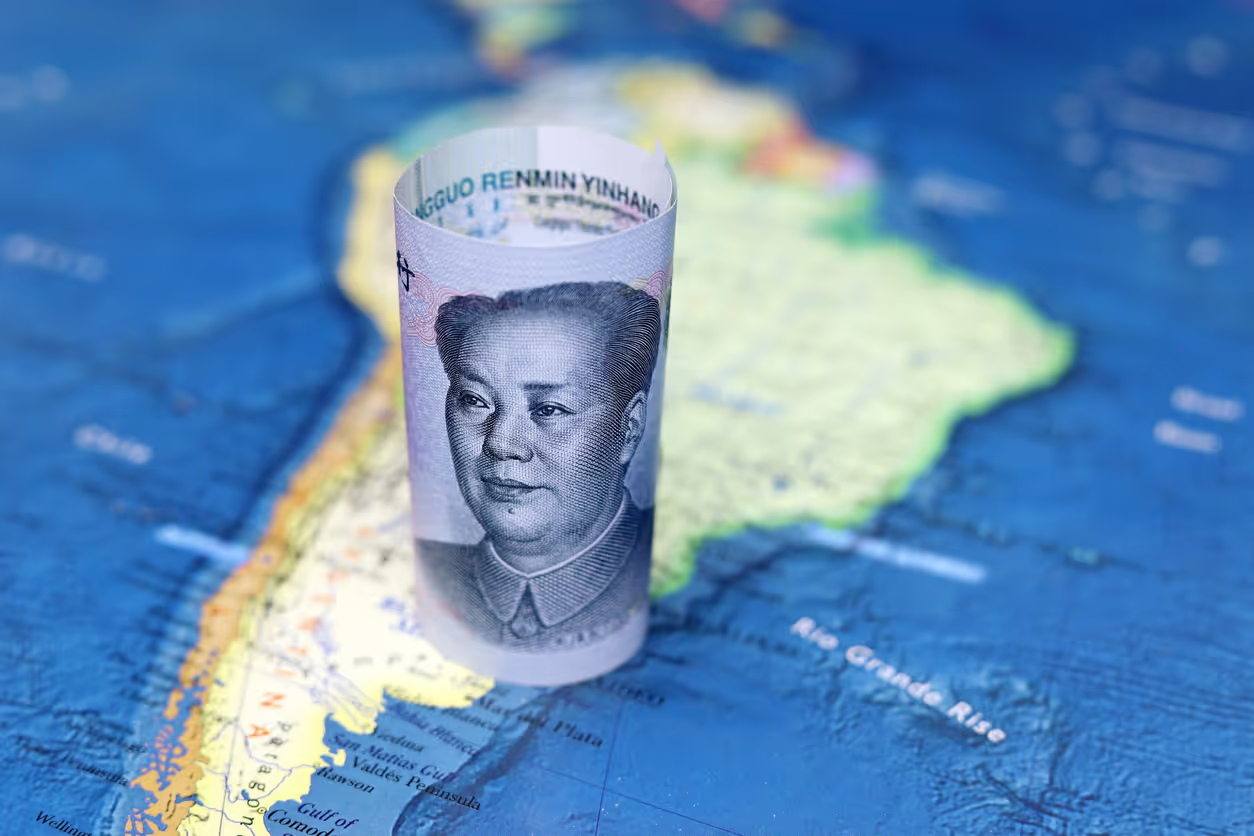
The Belt and Road Initiative (BRI), China’s ambitious global infrastructure and connectivity project, has increasingly directed its attention towards Latin America, fundamentally reshaping the region’s geopolitical and economic landscape. Since its formal inclusion in the BRI in 2017, Latin America has emerged as a critical frontier for this initiative, reflecting China’s growing recognition of the region’s strategic importance and vast development potential.
Over the past seven years, the BRI has catalyzed the launch of approximately 200 projects across numerous Latin American nations. These initiatives have predominantly centered on addressing the region’s pressing infrastructure and connectivity gaps, encompassing significant investments in public transportation systems, highways, energy transmission networks, and even highly specialized projects such as a deep space tracking station in Argentina.
This influx of direct Chinese investment offers a notable alternative to more traditional lenders like the IMF or the World Bank, providing new avenues for development financing. Beyond physical infrastructure, the BRI has also fostered partnerships in science and technology, enabling Latin American countries to expand their participation in high-tech global networks.
Currently, 21 Latin American countries have formally engaged with the BRI by signing Memorandums of Understanding (MOUs). This list includes key economies such as Chile, Argentina, Peru, and Venezuela, with Colombia recently declaring its intention to join. It is important to note that these MOUs typically do not create legally binding obligations under international law. Interestingly, despite its robust commercial ties and numerous cooperation agreements with China, Brazil has notably opted not to formally join the BRI, a strategic decision that highlights the diverse approaches within the region.
The complexities for the region
However, the BRI’s expanding presence in Latin America is not without its complexities and debates. The initiative has sparked critical discussions concerning potential debt dependencies, the implications for national sovereignty, and the long-term nature of these partnerships. These concerns are underscored by recent developments, such as Panama’s decision earlier this year not to renew its participation in the initiative. As the first Latin American country to withdraw from the BRI, Panama’s move signals a pivotal moment in the global geopolitical and economic dynamics surrounding the initiative, potentially influenced by a decline in new projects and a perceived weakening of China’s financial commitment.
For Latin America, the BRI represents a dual-edged sword: a source of much-needed investment and technological collaboration, yet also a catalyst for re-evaluating traditional alliances and navigating the intricacies of global power shifts. Understanding these evolving dynamics is crucial for regional stakeholders to strategically position themselves within this new global framework.
Conclusion
The BRI presents both opportunities and risks for Latin America. While it brings critical investment and innovation, countries must carefully assess geopolitical implications and long-term dependencies. Strategic engagement will be key to maximizing benefits while protecting national interests.