
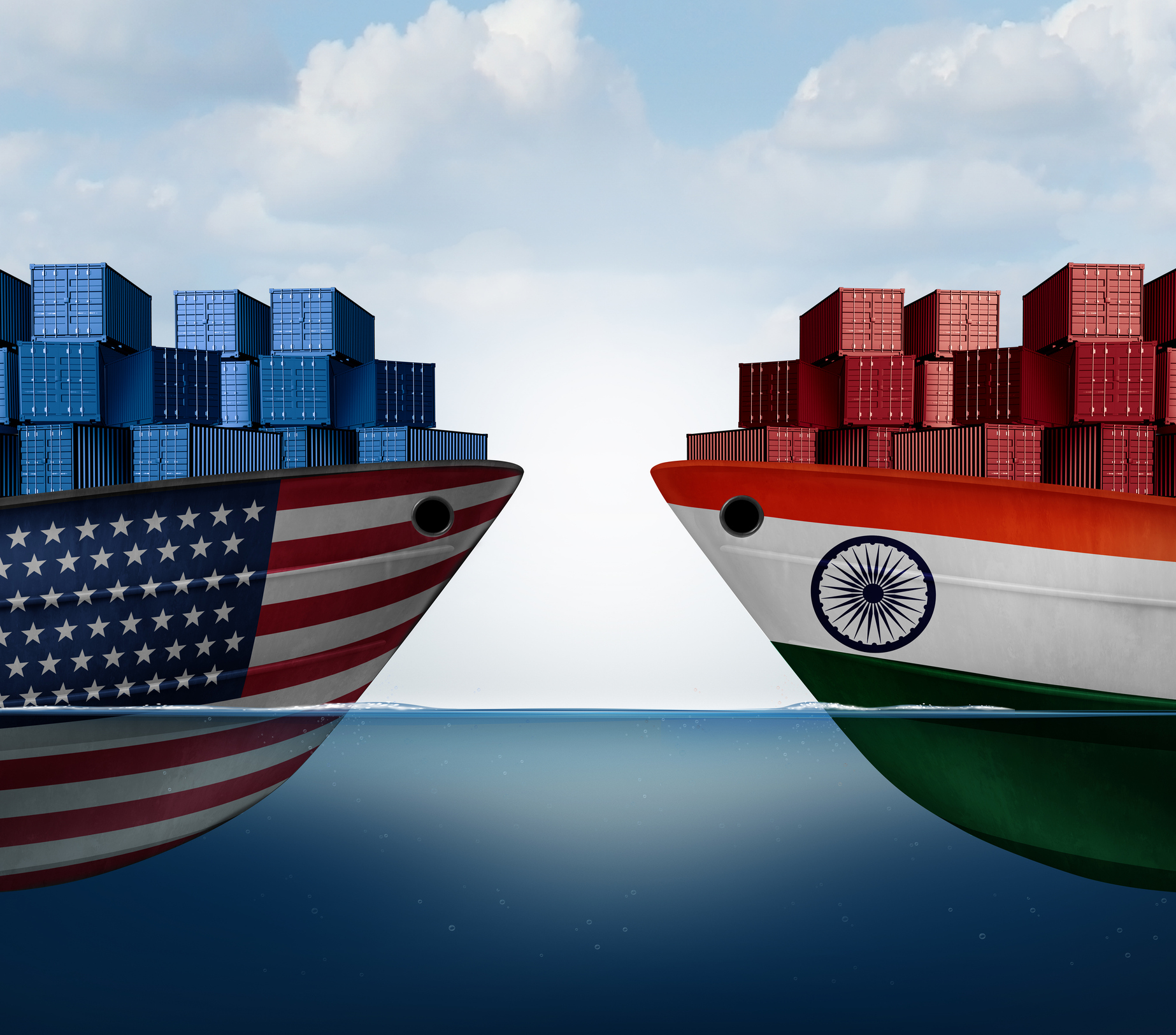
In the relationship between India and the United States, August is turning out tobe tumultuous, with many twists and turns, plots and subplots, that not only involve the oldest and the largest democracy of the world, but also other partners, neighbors, and even traditional adversaries. The developments will have implications for businesses and investors, beyond the India-US corridor, given the global supply chains.
Overthe last two weeks, both sides have made public statements on tariffs and trade, and what it means for them, at local, bilateral and international level. India’s Prime Minister, Narendra Modi, in his Independence Day’s speech last week emphasized on self-reliance, specifically in clean energy and critical minerals, and focus on spurring domestic innovation and economic activity. While he did not make a direct mention of the United States, he announced a major reform of simplification of Goods & Services Tax (GST) structure that will be implemented from October this year. This will boost domestic consumption, improve earnings for businesses, and potentially cushion some impact for exporters, especially SMBs, that stand to be impacted by the tariffs. India also announced removal of import duties on cotton till September 30th, a decision that is expected to benefit India’s textile industry, a key export item to the US.
India and the United States were aiming to have a comprehensive trade deal (BTA) by September/October this year, which seems less likely given the abrupt announcement of 25 per cent tariff on Indian goods that came into effect from August 1st, and the additional 25 per cent slated for August 27th, as secondary tariffs on India for buying crude oil from Russia. The development sturn the mood in New Delhi from optimism to sombre. India condemned the tariff hike as “unfair, unjustified and unreasonable,” with PM Modi reiterating his commitment to the interests of Indian farmers and strategic autonomy, in his speech as well. India argues that its energy purchases from Russia were amarket-driven necessity.
Meanwhile, the US continues to mount pressure on India through various forums, the latest being White House trade adviser Peter Navarro terming India as "a global clearinghouse for Russian oil” and accusing the country of ‘cozying up’ to Chinaas well, in an opinion piece in the Financial Times. While so far, the US administration has not taken any action on IP violations, given the past criticism by US President Donald Trump of India’s intellectual property regime,this threat lingers on and could further complicate the situation between the two countries. As per reports, the US trade delegation visit to New Delhi forthe 6th round of negotiations on BTA, which was scheduled from August 25-29, stand deferred to a later date.
Geopolitically, the standoff threatens to upend the delicate balance of the US-India partnership—constructed painstakingly over two decades. While strategic and defence ties remain officially intact, there is mounting uncertainty over future collaborations, as India signals a willingness to strengthen alliances through groups like BRICS and finalizes new trade deals with others, the latest being with the United Kingdom. PM Modi and Russian President Putin also had a telephonic conversation post the meeting of the latter with President Trump in Alaska. India’s Foreign Minister has reiterated India’s stand, of “a fair,balanced and multi-polar world order, including a multipolar Asia," post his meeting with the Chinese Foreign Minister in New Delhi at the beginning of this week.
Even as the world keenly watches the developments over the next two weeks between US, Russia, and Ukraine, including security guarantees and a summit, China will be hosting the SCO Summit from August 31-Sep 1, where PM Modi will be present, a first after seven years, and have a bilateral meeting with Chinese Premier asper reports. Unless there is a change or deferment of the secondary tariffs, considering the dialogue and development involving the United States and Russia, PM Modi would be walking into the summit with tariff rate that is the same as the one imposed on Brazil, 50 per cent. While Brazilian President Luiz Inacio Lula da Silva has stated that he plans to host a virtual BRICS summit to discuss tariffs and potentially a currency for trade within the bloc, India does not see de-dollarisation as an agenda.
Conclusion
With both nations holding firm to their core positions—and President Trump threatening even greater tariffs and secondary sanctions—the risk of a protracted impasse is real, and the negotiations are likely to become morec omplex with international developments and economic relations being rewired and hedged for the short to medium term.


