
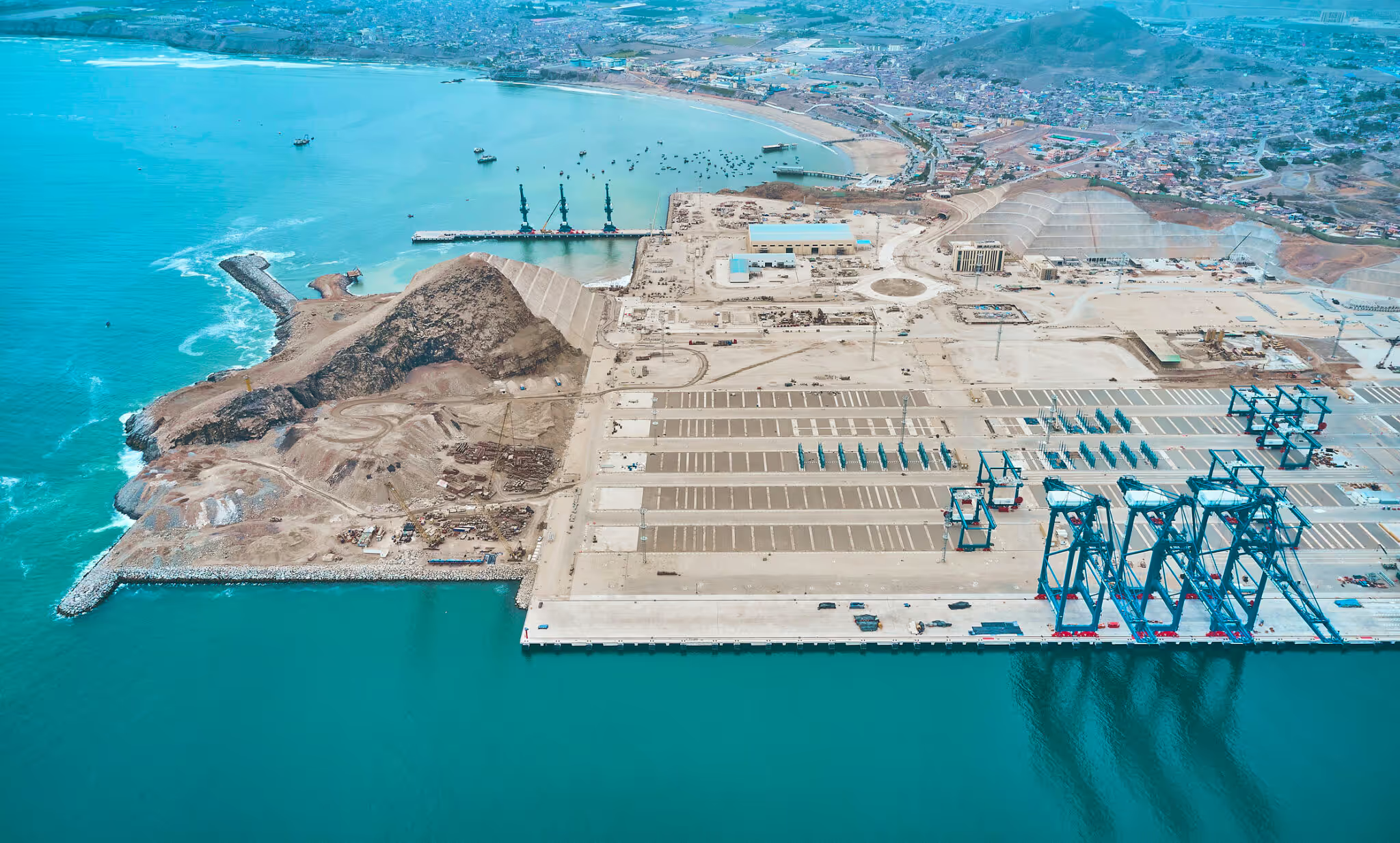
For Peru, the mega-port has been a source of both pride and contention. President Dina Boluarte envisions it as a “central nerve” capable of generating 8,000 jobs and US$ 4.5 billion in annual economic activity. However, the project has faced local opposition due to environmental, cultural, and economic concerns.
Winners
The surge in e-commerce platforms like Alibaba, Shein, and Temu has significantly boosted trade between China and Latin America. Temu, for instance, saw its user base soar from 5 million in September 2022 to nearly 70.5 million by March 2023.
These e-commerce companies, featuring vendors offering products at almost unbeatable prices, stand to be major beneficiaries of the new Chancay port’s inauguration, as it will enable them to reduce shipping times and enhance their connectivity with consumers across the continent.
In addition, Latin American countries are major producers of critical minerals, such as copper, lithium, and silver. The Chancay port offers a direct route for shipping these minerals to China, reducing transit times and costs compared to other ports in the region.
Likewise, the Port offers a strategic location for the export of a wide range of important resources for the Chinese market, including iron ore, gold, silver, zinc, cobalt, oil and gas, as well as agricultural products to meet China’s demand.
Losers
The inauguration of a maritime port such as Chancay places several economic actors in a complex situation. Initially, the primary maritime entities affected are the Port Company of San Antonio and the Port Company of Valparaíso, which were established as the main Pacific ports and will lose a significant portion of their traffic, relegating Chile to a secondary position in terms of commercial access to the continent.
It is important to note that, according to the document “Port Operations in the Valparaíso Region: Quintero, San Antonio, Valparaíso, and Ventanas,” the main products imported through the Port of San Antonio are automobiles (cars, trucks, vans), clothing and accessories, electric motors and generators, televisions, paper and cardboard and their manufactures; while at the Port of Valparaíso, the main imports are clothing and accessories, tires, electric motors and generators, pharmaceuticals, computers and parts, footwear, and vehicles for the transportation of people and goods.”
In terms of refrigerated cargo, the main products landed at the Port of San Antonio include beef, pork, poultry, tuna, Ecuadorian shrimp, cheese, fresh flowers, bananas, avocados, apples, garlic, and other fruits and vegetables; while at the Port of Valparaíso, the main products are beef, pork, poultry, shrimp, Ecuadorian shrimp, ham (Serrano, cooked, raw), peas, and beans. (Saavedra, 2024).
However, following the re-election of President Trump, goods passing through this port could also be impacted by the proposed US protectionist policies that aim to increase tariffs on Chinese products by 60%, according to statements by the incoming US administration. Products transiting through this port would be subject to the same treatment as those produced in China (Soto, 2024)
Returning to the e-commerce sector, large companies like Amazon.com or Mercadolibre with a presence in several countries in the region, whose value proposition is to connect sellers with potential buyers (from large corporations to small entrepreneurs), could be affected by the competitive advantage generated by the mega-port of Chancay for Chinese e-commerce platforms reducing the shipping times. Considering that goods produced in the region find it almost impossible to compete with the low prices offered by Chinese producers.
Other Considerations
Within the landscape of economic and political interests, it is crucial to recognize that the United States will strive to curtail China’s commercial expansion in Latin America. Recent reports indicate that the Port of San Antonio, situated in the Valparaíso region of Chile, has become a focal point for US investment, aimed at countering China’s inroads in Chancay. This interest is primarily driven by the desire to bolster Chile’s port infrastructure to effectively compete with Peru’s new megaproject. However, the modernization of Chilean ports has faced significant delays due to the protracted environmental licensing process. As Eduardo Abedrapo, chairman of the EPSA board, explained to Portal Portuario, there are currently at least 34 domestic and international companies expressing interest in these projects. (Magallanes, 2024)
Another significant development in the geopolitical landscape is the recent announcement made by the Nicaraguan government on Monday, November 18th, confirming the construction of a deep-water port in the city of Bluefields, on Nicaragua’s Caribbean coast. This announcement was made during the 17th China-Latin America and the Caribbean Business Summit. “This is one of several agreements signed by the Ortega government with China, which also include the construction of a logistics center, a pharmaceutical distribution center, a market, a recycling plant, and a wind farm”, reported CNN. (CNN Español, 2024; Magallanes, 2024)
Lastly, Colombia has confirmed their intention to increase the capacity of the Buenaventura port, to increase commerce for the country and support the operations of the Chancay port. On this, the government has confirmed that by the end of 2026 the operations to dredge the port to better the access channel, and that the plan is to receive bigger ships by 2027.
Conclusion
The Chancay port represents more than infrastructure—it’s a strategic realignment in Latin America’s trade and influence. While Peru may benefit economically, the project amplifies China’s presence in the region, triggering competitive responses from neighbors like Chile, Colombia, and Nicaragua, and raising concerns in Washington. U.S.–China rivalry is expected to intensify around port investments, particularly as trade protectionism and tariffs re-emerge under a potential Trump return. For regional players, this creates both risk and opportunity. Countries that adapt quickly, improve infrastructure, and align with global trade trends could strengthen their role in the new trade landscape shaped by Chancay.


