

Poland’s healthcare system faces significant challenges, including long waiting times for services, a projected funding gap of up to €36.3 billion between 2025 and 2027, and an increasing demand for resources due to an aging population and rising chronic diseases. These challenges have highlighted the urgent need for strategic investment and reform. In response, Poland is committed to increasing public healthcare spending to 7% of GDP by 2027, a move that aims to improve access to care, address funding shortfalls, and foster long-term economic resilience by enhancing health outcomes and workforce productivity (OCDE,2025).
The OECD’s call for balanced growth
The OECD has underscored the importance of balancing Poland’s economic ambitions with sound fiscal management, particularly emphasizing the need for investments in healthcare to ensure sustainable growth. The 2025 economic outlook stresses that Poland’s healthcare sector continues to grapple with challenges such as extended waiting times, high demand, and financial pressures. According to OECD projections, the funding shortfall could reach €36.3 billion between 2025 and 2027, exacerbated by increased wages in the healthcare sector and depleted reserves. These findings provide a backdrop for Poland’s healthcare strategy, which includes enhancing public spending and attracting private sector engagement (OECD,2025).
Healthcare: A critical, yet somehow understated, focus
Continued improvements in healthcare are essential not only for addressing pressing societal needs but also for driving economic performance. Poland’s healthcare market, valued at €43.5 billion in 2023, is expected to grow annually by 8.3% through 2028, driven by higher public spending and increasing demand for healthcare services (Statista, 2023-2028). By prioritizing healthcare investments, Poland can reduce absenteeism, improve labor productivity, and achieve better health outcomes – all of which contribute to enhanced economic stability and growth.
Opportunities for the private sector
Poland’s healthcare sector offers significant opportunities for multinational corporations, particularly in digital health, infrastructure, and AI-enabled medical technologies (OECD, 2025). Compared to its Central and Eastern European counterparts, Poland’s healthcare expenditure remains moderate. According to Eurostat data from 2022, Poland allocated 6.4% of its GDP to healthcare, while Czechia spent 8.1%, and Hungary spent less at 4.4%. Other CEE countries such as Croatia (7.7%), Slovenia (7.6%), and Estonia (6.0%) also outspend Poland, while Romania (4.9%) and Latvia (4.8%) invest less in healthcare (Statista, Eurostat, 2024). This highlights the need for continued investment to improve public health outcomes and meet growing demand.
EU funding opportunities
Poland has access to significant EU funding programs to support healthcare development. In the new financial perspective for 2021-2027, the European Regional Development Fund (ERDF) will allocate at least €1,030.6 million (PLN 4.3 billion) to the health sector, particularly focusing on strengthening primary healthcare (POZ) and outpatient specialized care (AOS). Additionally, the funds aim to improve accessibility to healthcare establishments and complement national efforts to reform psychiatry. Around €180 million (PLN 0.8 billion) will be allocated specifically to support e-health projects as part of digitalization efforts. This funding is crucial, as Poland is expected to be the largest spender on health investments in the EU under this program (European Parliament Report, 2021).
Further, approximately €300 million (PLN 1.3 billion) is available under the Polish Infrastructure, Climate, and Environment 2021-2027 Programme (FEnIKS) for the development of primary care services, including the procurement of medical and ICT equipment (Gov.pl). These funds present an excellent opportunity for private sector players to engage in projects aimed at modernizing Poland’s healthcare infrastructure.
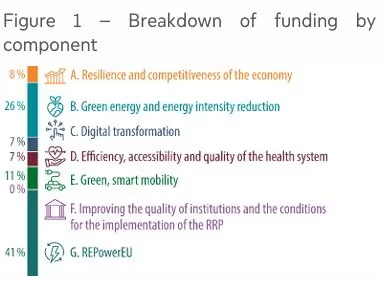
Additionally, the Polish government has allocated €4.1 billion (PLN 17 billion) from the National Reconstruction Plan (KPO) for modernization, digitalization, and research development in healthcare. This funding is particularly valuable as it is set to be used until the KPO’s implementation ends in August 2026 (European Parliament Report, 2024).
Public-private partnerships: A path to modernization
Public-private partnerships (PPPs) are already playing a substantial role in Poland’s healthcare modernization efforts. The Żywiec Powiat PPP Hospital, one of the first major healthcare projects in Poland under a public-private partnership model, serves as a landmark example of how collaboration between public entities and private corporations can address critical infrastructure needs. Similarly, the Łódź Medical Center PPP is an important project aimed at modernizing healthcare services in central Poland, while other regions like Kraków and Wrocław are seeing similar developments. These initiatives showcase the potential of PPPs to not only address the pressing demand for healthcare services but also to drive innovation in healthcare delivery, especially in areas such as digital health and medical technologies (Arup, Belt and Road HKTDC).
Policy recommendations for Poland’s healthcare sector
To strengthen Poland’s healthcare system and ensure its sustainability, policymakers should prioritize investments in critical areas such as hospital infrastructure, digital health services, and workforce training. Encouraging private sector participation through clear policy incentives, fostering transparency in public-private partnerships, and implementing reforms to reduce waiting times and improve service quality will be essential. Additionally, integrating healthcare investments with broader economic strategies will ensure that healthcare serves as both a societal benefit and an economic driver.
Poland’s healthcare sector is at a crossroads, and the government’s commitment to strategic investments is vital for shaping a healthier, more resilient future. By embracing innovation, fostering public-private collaboration, and aligning healthcare spending with long-term economic goals, Poland can build a healthcare system that not only meets the needs of its citizens but also contributes to broader economic prosperity.
Conclusion
Poland’s commitment to increasing healthcare spending and embracing innovation marks a crucial step toward building a more resilient and efficient health system. By leveraging EU funding and encouraging public-private partnerships, the country has a unique opportunity to modernize infrastructure, improve access to care, and integrate digital solutions. These efforts will not only benefit public health outcomes but also contribute to long-term economic growth by enhancing workforce productivity and ensuring a healthier population. Continued focus on strategic reforms and collaboration with the private sector will be key to achieving lasting impact.


