
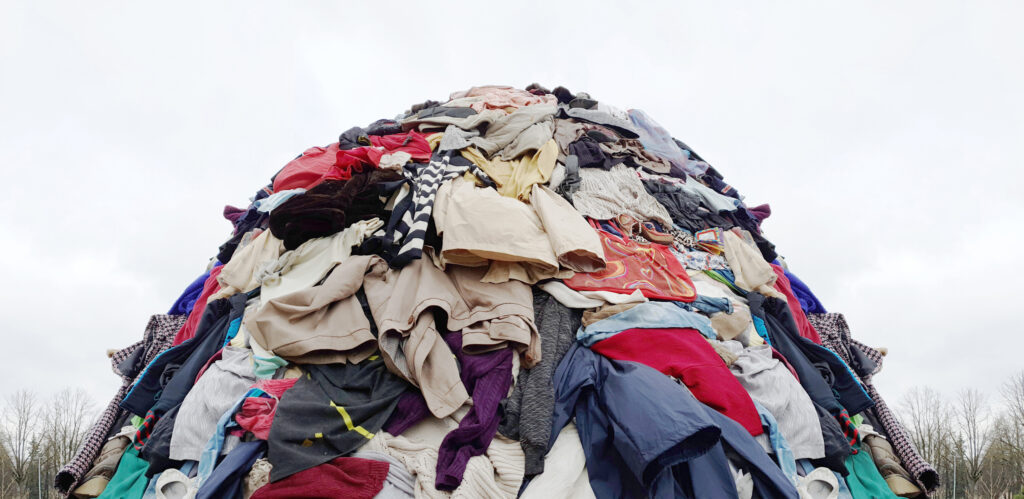
The European Environment Agency reports that the EU generates around 7 million tonnes of post-consumer textile waste annually—about 16 kg per person—and this volume is growing (EEA, 2024, based on 2020 data). In Czechia alone, approximately 180,000 tonnes of textiles are discarded each year, with only about 39,000 tonnes (22 %) sorted for recycling (Czech Ministry of Environment, 2025). The rest is typically contaminated or mixed, making recovery and reuse difficult. In response, the EU is deploying a range of policy instruments to build a circular textile economy. Among these, Extended Producer Responsibility (EPR) for textiles and Digital Product Passports (DPPs) stand out as particularly impactful.
Industry reactions across Europe reflect a mix of concern and pragmatism. EU textile associations have warned lawmakers not to introduce vaguely defined durability criteria into EPR fee calculations, arguing that this could fragment the Single Market and unfairly penalize some producers. In response, a group of European Producer Responsibility Organizations (PROs) and business representatives have launched the Textile PRO Forum to harmonise and share best practices for effective EPR implementation.
CEE’s position in this transition is shaped by its growing role in manufacturing, uneven infrastructure development, and integration into global supply chains.
Textile EPR developments
In April 2025, the EU adopted a revised Waste Framework Directive introducing mandatory EPR for textiles. Member States must implement national systems by late 2026 or early 2027. Producers will be financially responsible for managing the end-of-life of textile products, including collection, sorting, and recycling.
CEE countries are responding in different ways, shaped by the constraints and capacities of their existing systems. While some, like Czechia, have proactively adjusted legislation and infrastructure, others are facing significant implementation hurdles:
Czechia: Mandatory separate textile collection began in January 2025. The rollout has encountered familiar challenges. Smaller municipalities face high operational costs and lack adequate infrastructure. Much of the collected material is unsuitable for reuse or recycling due to contamination. There is concern that residents may mix textiles with general waste, complicating sorting and raising costs. A recycling fee on new clothing is expected to support a producer-financed system, but it will not be operational before 2027.
In Prague, a new initiative Dress Praguewas launched in May 2025 by the non-profits, the City of Prague, and the Ministry of Environment, providing exclusive data on consumer behavior, and aiming to strengthen circular practices through education and better collection infrastructure.
Poland: Poland mandates textile acceptance at selective waste points. However, infrastructure development and public compliance are still behind. To address these gaps, pilot projects using mobile collection models have been tested in urban areas such as Warsaw, although coverage and scalability remain limited. Municipalities are not obligated to offer door-to-door textile collection, which limits access to proper disposal options.
Slovakia: Slovakia is preparing to introduce an EPR system but currently has only two textile sorting facilities. The country is also working to design governance models suited to its smaller, more concentrated market.
Digital product passports and the push for verified sustainability
The Digital Product Passport (DPP), introduced under the Ecodesign for Sustainable Products Regulation (ESPR), will become mandatory for textiles in 2027. These digital records will include detailed information on materials, origin, recyclability, and repairability. A final consultation on the framework remains open until July 1, 2025, with technical specifications expected by early 2026.
For producers and manufacturers across a variety of sectors, including textiles, the shift toward circularity is raising expectations and regulatory demands, including greater responsibility for providing reliable environmental data and managing end-of-life product impacts. Compliance will require digital upgrades, better data practices and stronger traceability. Rising expectations from consumers and investors are pressuring brands to back up their sustainability claims. This demand for credible, verifiable information is reinforced by the Unfair Commercial Practices Directive (UCPD),which bans vague or misleading green claims. The companion Green Claims Directive—meant to define how such claims must be substantiated—was withdrawn by the European Commission on Friday, 20 June, after strong backlash from business groups across Europe. Organizations like Eurochambres and the Czech Chamber of Commerce warned that the directive would create disproportionate burdens for small and medium-sized firms, offering more bureaucracy than clarity. The withdrawal was notably co-driven by Czech MEP and Parliament rapporteur Danuše Nerudová, who advocated for the proposal to be shelved in response to mounting regional industry concerns.
Conclusion
The implementation of textile EPR systems is a particular test for the CEE: while EPR schemes have long been in place for sectors such as packaging and electronics, the textile sector is only now developing its own regulatory and operational framework. This means building logistics capacity, setting up collection and sorting infrastructure, and ensuring that data systems are ready for integration with EU-wide traceability frameworks.
For stakeholders, the need for practical expertise, data systems support, and localized strategies will grow. This evolving compliance landscape presents a clear opening for service providers. Navigating this shift effectively requires on-the-ground insight and technical capacity, particularly where national systems face operational and/or policy bottlenecks.
Conclusion
The EU’s textile regulations present both challenges and opportunities for CEE countries. Success will depend on building infrastructure, improving data systems, and tailoring strategies to local conditions. With the right support and collaboration, the region can turn regulatory pressure into a driver for sustainable innovation.


