
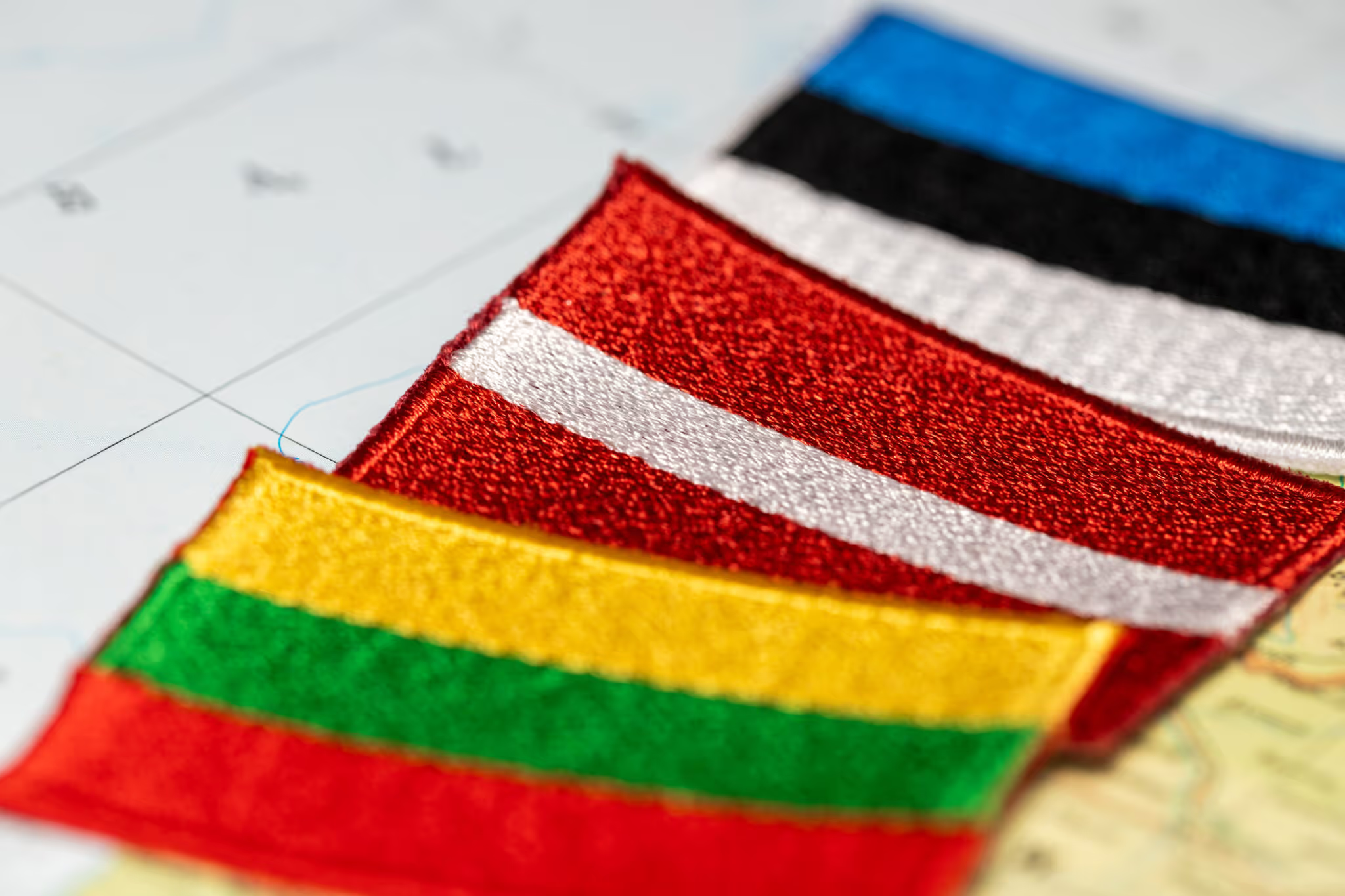
The Baltic states — Estonia, Latvia, and Lithuania — have long positioned themselves as agile, forward-leaning members of the European Union. In 2025, the region is signaling a stronger commitment to energy resilience and digital infrastructure. This comes amid a changing geopolitical landscape, as the Baltics deepen alignment with NATO and the EU in response to regional security threats and rising tensions with Russia.
In the span of just a few months, Estonia formally launched the planning process for a new nuclear energy facility, Lithuania approved a nationally backed AI Factory, and the region completed a long-anticipated grid integration with the broader European electricity network. Together, these developments reflect a broader trend: the Baltics are increasingly proactive in shaping their economic and policy agenda, rather than simply reacting to external dynamics.
Estonia explores 600 MW nuclear power plant
Estonia’s energy strategy took a step forward this spring with the launch of national spatial planning for a proposed 600 MW nuclear power plant, led by domestic developer Fermi Energia. Backed by international technology partnerships and supported by early-stage community engagement, the proposal highlights Estonia’s long-term thinking on energy diversification and system stability.
The designated planning area spans multiple municipalities in Lääne-Viru and Ida-Viru counties, along with nearby sea zones—making it one of the more comprehensive infrastructure assessments underway in the region. Partnerships with firms like GE Hitachi and Samsung C&T showcase growing international interest in Estonia’s nuclear ambitions and offer early signals to investors watching the clean energy space in Northern Europe.
Lithuania’s AI Factory: Building digital capacity
Lithuania is moving to strengthen its digital infrastructure with the greenlighting of a national “AI Factory”—a €100 million initiative designed to support applied AI in sectors such as cybersecurity, health technology, industrial automation, and energy systems.
As regards the funding model: approximately 50% of the funding is expected to come from the European Commission, while the Lithuanian government will contribute up to €50 million, with additional support anticipated from private sector partners.
If delivered on time and at scale, the centre could create up to 500 high-skilled jobs by 2027 and position Lithuania for participation in broader pan-European AI initiatives. For a country already seen as a digital governance leader, the project reflects a shift from regulatory strength to capacity building.
Latvia: Moving with caution, but in step with regional priorities
While Latvia has made fewer headline announcements, it continues to align with key regional priorities, particularly in EU-funded transport, defense readiness, and digital governance.
Overall, regional defense coordination and NATO interoperability continue to shape Baltic planning, particularly in cross-border infrastructure and strategic readiness. It is likely to remain a relevant player in Baltic-wide initiatives, especially those tied to infrastructure and interoperability.
In February 2025, all three countries formally completed the synchronization of their electricity systems with the European continental grid—a technical milestone that had been years in preparation. The transition enhances energy market access and aligns the region more closely with EU-wide operational standards. The long-term implications are significant:
- Stronger energy resilience;
- Integration with the broader European electricity market;
- Reduced reliance on legacy infrastructure.
The transition also marks a final step in efforts to localize energy control and planning within the EU framework, a priority that has become even more urgent given the current geopolitical landscape.
—
These developments suggest a region gradually evolving its economic and policy model, asking for closer attention from investors and regional stakeholders alike. They suggest more predictable regulatory environments, emerging opportunities in infrastructure and innovation, and an increasingly deliberate effort by governments to attract long-term capital. While the execution timelines and political coordination required for these projects remain an aspect to be watched — particularly in Estonia, where questions around political stability may influence the pace of progress — the direction of travel is clear: the Baltics are laying the groundwork for a more resilient, modernized regional economy.
Conclusion
The Baltics are actively modernizing their economies and infrastructure to strengthen energy security, digital capacity, and geopolitical alignment. While execution challenges remain, particularly in political coordination, the region’s proactive agenda signals a more stable, investor-friendly environment focused on resilience and innovation.


