
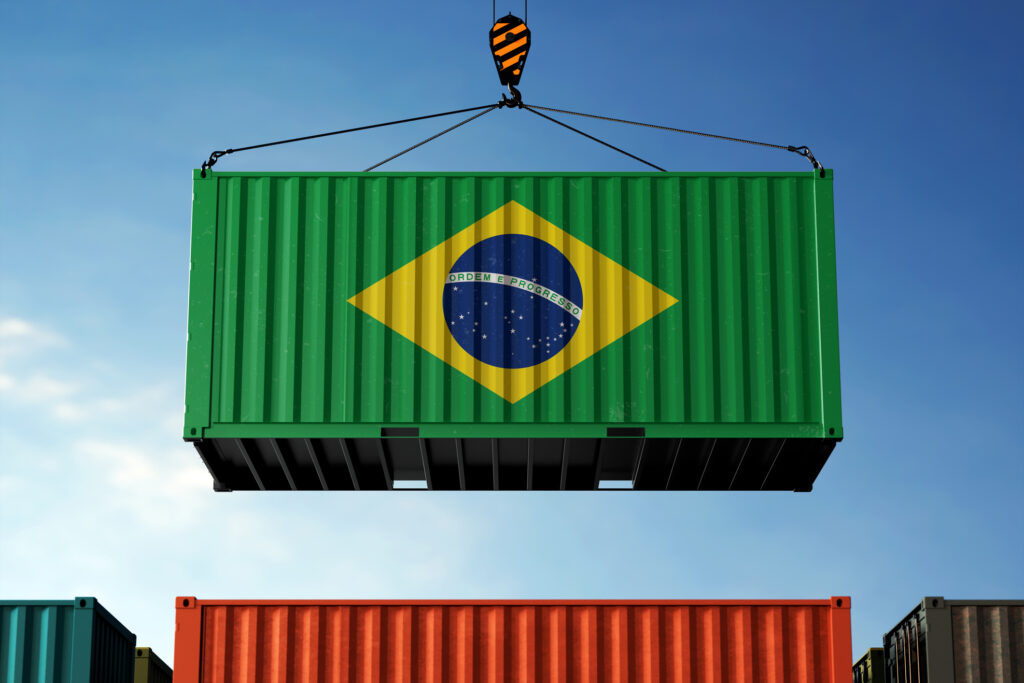
President Donald Trump’s decision to impose a 50% tariff on Brazilian imports is the latest escalation in a series of tensions between the U.S. and Brazil. This move, announced on July 9, 2025, comes just days after Trump publicly criticized the Brazilian Supreme Court for what he called a “witch hunt” against former President Jair Bolsonaro. Trump has repeatedly accused the court of persecuting Bolsonaro, a close ally during his presidency, and has framed the ongoing legal proceedings as an international disgrace. Additionally, Trump has been vocal in his criticism of the BRICS bloc, which includes Brazil, Russia, India, China, and other Countries, accusing it of undermining U.S. economic dominance. This week, as BRICS leaders convened in Rio de Janeiro for a high-profile summit, Trump’s tariff announcement appears to be a direct challenge to the group’s growing influence.
A Tariff Beyond Trade: Political Messaging and Bolsonaro’s Shadow
Trump’s decision to impose such a significant tariff on Brazil cannot be understood solely through the lens of trade imbalances. While the U.S. has a trade surplus with Brazil, Trump’s rhetoric has consistently framed the relationship as one-sided and detrimental to American interests. However, the timing and justification of this tariff reveal a deeper political agenda. Trump explicitly linked the tariff to the treatment of Bolsonaro, whom he described as a “highly respected leader” and whose ongoing trial he labeled a “witch hunt.” This alignment with Bolsonaro, a polarizing figure in Brazil, signals a clear attempt to influence domestic Brazilian politics and undermine the current government led by President Luiz Inácio Lula da Silva.
Bolsonaro, a staunch ally of Trump during his presidency, has been a symbol of right-wing populism in Brazil, and his legal troubles have become a rallying point for his supporters. By framing the tariff as a response to Bolsonaro’s treatment, Trump is not only defending a political ally but also stoking the flames of Brazil’s already polarized political landscape. This move is likely to exacerbate social divisions within Brazil, where Bolsonaro’s supporters have already been vocal in their opposition to Lula’s government. The tariff, therefore, serves as both a political weapon and a means to weaken Lula’s administration by increasing economic pressure.
Economic Impact: Short-Term Pain and Long-Term Uncertainty
The immediate economic consequences of the tariff are clear. Brazilian exporters, particularly in the agricultural sector, will face significant challenges. Products like coffee, beef, and orange juice, which are major exports to the U.S., will become less competitive, potentially leading to a decline in sales and revenue for Brazilian producers. The Brazilian stock market and currency have already reacted negatively, with the Ibovespa falling and the dollar surging against the real. This volatility reflects investor concerns about the broader implications of the tariff on Brazil’s economy.
In the long term, the tariff could lead to a reevaluation of Brazil’s trade relationships. Trump’s suggestion that Brazilian companies could avoid the tariff by relocating production to the U.S. is a clear attempt to attract investment and jobs to American soil. However, this strategy is unlikely to be a viable solution for most Brazilian businesses, particularly smaller ones that lack the resources to establish operations abroad. Instead, the tariff may push Brazil to strengthen its ties with other trading partners, particularly within the BRICS bloc, which Trump has explicitly targeted as a threat to U.S. economic dominance.
The Broader Strategy: Tariffs as a Tool of Geopolitical Influence
Trump’s use of tariffs extends beyond Brazil. In the same week, he announced tariffs on several other countries, including the Philippines, Algeria, and Iraq, signaling a broader strategy of using trade policy to assert U.S. influence globally. This approach, which Trump has employed throughout his presidency, reflects a belief in the power of economic measures to achieve political and strategic goals. By imposing tariffs, Trump is not only seeking to protect American industries but also to send a message to countries that he perceives as not aligning with U.S. interests.
In the case of Brazil, the tariff is a clear attempt to pressure Lula’s government into altering its policies, both domestically and internationally. Trump’s mention of a Section 301 investigation into Brazil’s trade practices further underscores this intent. The investigation, which could lead to additional sanctions, is a tool that allows the U.S. to challenge what it sees as unfair trade practices, but it also serves as a means to exert leverage over Brazil’s government.
Domestic Implications: Polarization and Political Fallout
The tariff’s impact is not limited to the economic sphere; it also has significant domestic implications for both the U.S. and Brazil. In Brazil, the move is likely to deepen the political polarization that has characterized the country since Bolsonaro’s presidency. Bolsonaro’s supporters, who have already been critical of Lula’s government, will likely view the tariff as further evidence of international interference in Brazil’s affairs. This could lead to increased social unrest and further destabilize Lula’s administration.
In the U.S., the tariff is likely to be framed by Trump as a victory for American workers and industries. However, it may also face criticism from those who argue that such measures harm U.S. consumers by increasing the cost of imported goods. The broader debate over the use of tariffs as a tool of foreign policy is likely to intensify, particularly as the 2026 Brazilian presidential election approaches.
A Stark Reminder of Geopolitical Leverage
Trump’s 50% tariff on Brazil is more than just a trade measure; it is a calculated geopolitical maneuver aimed at reasserting U.S. influence in a region where it feels its dominance is slipping. By targeting Brazil, Trump is not only seeking to pressure Lula’s government but also to send a broader message to the BRICS bloc and other nations that the U.S. remains a dominant force in global trade and politics.
As Brazil navigates this new reality, the tariff serves as a stark reminder of the ways in which economic measures can be wielded as instruments of geopolitical influence. The fallout from this decision will likely reverberate for years to come, both in Brazil and beyond. With Brazil’s next presidential election on the horizon, the tariff and its consequences will undoubtedly be used as political ammunition, shaping narratives and influencing the economic and foreign policy debates that will define the race. In this context, the tariff is not just a trade policy—it is a tool of electoral and geopolitical warfare.
Conclusion
Trump’s tariff is not just about trade—it’s a political signal. It supports Bolsonaro, pressures Lula’s government, and pushes back against BRICS, showing how economic tools can be used for broader geopolitical influence.


